Franciszek Kornicki
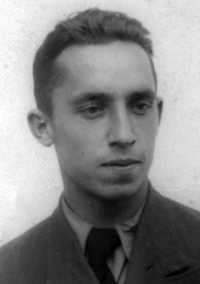
Franciszek Kornicki was born as Franciszek Pluskwa on 18 December 1916, at the village of Wereszyn near Hrubieszów (at the time under Russian occupation, now in the Hrubieszów County, Lublin Province, Poland). He was the youngest child in a poor family of Łukasz Pluskwa, a local estate worker, and Aniela née Jędruszczak. He had five older brothers: Stanisław, Władysław, Feliks, Kazimierz, and Jan. Having demonstrated exceptional talents as a primary school pupil, his teacher suggested that his education should continue. Despite the difficult financial situation, collective effort of the family enabled him to attend the humanities-type Stanisław Staszic State Secondary School (Państwowe Gimnazjum im. Stanisława Staszica) in Hrubieszów, where he passed his final (maturity) exams on 20 May 1936. As the family could not afford to fund his university education as well, he was compelled to seek an academy that provided tuition, accommodation, and catering free of charge. He successfully passed the entrance exams at the Polish Air Force College (Szkoła Podchorążych Lotnictwa) at Dęblin, following which he completed a three-month course at the Polish Infantry College (Szkoła Podchorążych Piechoty) at Różan, and then he joined the PAF College in early January 1937. Under the regulations in force before WWII, he could not be commissioned as an officer while bearing his native surname ‘Pluskwa’, as this was considered inappropriate for an officer of the Polish Forces (being identical with a Polish word for ‘bedbug’). Like other officer cadets in a similar situation, he applied for a change of his surname to either Nałęcki, Kornicki, or Żarecki. The national authorities’ approval for the surname Kornicki was gazetted on 3 April 1939.
Due to the tense international situation and the threat of a war, the training of his class was accelerated. In the summer of 1939, while still an officer cadet, he was posted for operational training to the 162nd Fighter Flight (162 Eskadra Myśliwska) of the 6th Air Regiment (6 Pułk Lotniczy) in Lwów (now Lviv, Ukraine), which was equipped with PZL P.7 aeroplanes, by then completely obsolete. Together with the 161st Fighter Flight, which flew the more modern PZL P.11s, they formed the III/6 Fighter Squadron (III/6 Dywizjon Myśliwski). As part of the mobilisation in late August 1939, the III/6 Squadron was attached to the ‘Łódź’ Army air arm, and it was in the vicinity of the city of Łódź that it commenced combat operations on 1 September. Franciszek Kornicki was commissioned (with his entire class) with seniority of 1 August 1939, but in the chaos of mobilisation and war, the news did not reach them until significantly later (Kornicki learned of it on 10 September), so he is still listed as an officer cadet in documents related to the 1939 fighting over Poland. He ranked third among the 173 officer cadets of his class who were commissioned.
The fighter flights from Lwów, like other units of the Polish Air Force, fought in the face of complete superiority of the Luftwaffe in terms of numbers, technology, and tactics. During an air combat with German aircraft in the early days of the war, on 3 or 4 September 1939, Kornicki fell out of the cockpit of his PZL P.7 while performing a half-roll (when recalling that later, he openly admitted that he may have simply failed to fasten his harness properly). He used his parachute and landed uninjured in a field near the village of Kalinko and was taken back to his unit’s airfield by car.
The III/6 Squadron withdrew from the Łódź area toward Grójec on 5 September, and then continued to move further and further to the south-east. In his assessment of the young pilot’s attitude during the 1939 Polish Campaign, Maj. Stanisław Morawski, commanding the III/6 Squadron, recommended Kornicki to be awarded the Cross of Valour, stressing that he had taken part in several air combats and distinguished himself with tenacity and courage. Col. Wacław Iwaszkiewicz, commanding the ‘Łódź’ Army air arm, supported the recommendation, but the decoration was eventually not awarded.
Following the Soviet invasion of Poland, it was decided to evacuate all air units to Romania. Kornicki crossed the Polish-Romanian border on 18 September afternoon, travelling by car with several fellow aviators. Subsequently, like thousands of others, he assumed the guise of a ‘tourist’ and reached France within a few weeks. He left the port of Balcic (now Balchik, Bulgaria) aboard SS ‘Patris’ in a large group of Polish aviators on 5 November, arriving in Marseille on 12 November 1939. During his journey through Romania, he used the assumed name ‘Żarecki’ (one of the name options he had requested to adopt several months earlier).
He received service number 812 in the exiled Polish Air Force in France. For the first few months, he had a formal posting to the Polish Air Force Training Centre (Centrum Wyszkolenia Lotnictwa; CWL) in Lyon. In the spring of 1940, he finally underwent training on French fighter aircraft (including the Morane-Saulnier MS-406) as a member of the CWL Fighter Training Flight (Szkolna Eskadra Myśliwska CWL). Following the German invasion of France, he took part in defensive patrols over Lyon, though he failed to participate in air combat. After France fell, he was evacuated with the CWL staff to the south-western part of the country. Eventually, he boarded SS ‘Arandora Star’ on 24 June, arriving at Liverpool on 27 June.
He received service number P-0695 in the Polish Air Force in Britain. He was posted to ‘B’ Flight of the newly formed No. 307 ‘City of Lwów’ Squadron in mid-September 1940. The unit was equipped with Boulton Paul Defiants, in which no armament was operated by the pilot, the enemy being engaged by an air gunner operating a turret with four machine guns. This led to a protest from the pilots who had been trained on single-seat fighters in Poland. Consequently, a group of pilots left No. 307 Squadron on 2 October, to undergo brief conversion training. Kornicki arrived at the already-famed No. 303 ‘Kościuszko’ Squadron on 12 October. It was decided a while later that the Battle of Britain ended on 31 October 1940. Kornicki officially flew his first patrol in November, so he was not awarded the decoration for participation in the Battle under generally accepted criteria, and was therefore not considered one of ‘The Few’ (a fact he usually pointed out himself when talking to journalists or historians). He was re-posted to the newly forming No. 315 ‘Dęblin’ Squadron on 22 January 1941. He then flew on operations with it for the next two years. Initially, the missions were patrols in defence of England and of the convoys bound for it, flown in Hurricane Is. Then, between July 1941 and April 1942, the unit was based at RAF Northolt near London, flying offensive operations over occupied Europe: escorting bombers, attacking ground targets, and carrying out sweeps against German aircraft. Spitfire IIs were used initially, and then Spitfire Vs from September 1941. Subsequently, the ‘Dęblin’ Squadron rested from intense operations at RAF Woodvale in north-west England. Kornicki became No. 315 Squadron’s ‘A’ Flight commander on 7 April 1942. The unit returned to Northolt and resumed intensive combat operations in September, re-equipping with the latest British fighter, the Spitfire IX, in November.
Kornicki assumed command of No. 308 ‘City of Cracow’ Squadron, also based at Northolt and equipped with the older Spitfire Vs, on 12 February 1943. At the time, he was the youngest officer to hold a similar post in the entire Polish Air Force (only a few other officers were younger than him when appointed squadron commanders throughout the history of the exiled Polish Air Forces). His posting to No. 308 Squadron proved short-lived, however, as he was hospitalised for an appendectomy in February 1943. Following his convalescence, he was appointed to command No. 317 ‘City of Wilno’ Squadron on 21 April. He actually took over the post in early May 1943, and retained it until the end of his operational tour. Throughout this period, No. 317 Squadron took part in operations over occupied Europe, flying from various airfields in southern England. This was a time of direct preparations for the upcoming Allied invasion of France. Kornicki handed over command of the squadron at the end of 1943, and began a mandatory period of rest from operations. He assumed the post of the Polish Liaison Officer at the HQ No. 11 Group RAF on 1 January 1944, and then a similar post at No. 9 Group RAF on 15 February. Subsequently, he joined the fifth class (3 April to 28 November 1944) at the Polish Air Force Staff College at Weston-super-Mare, which trained staff officers intended to form the command cadre of the Polish Air Force after the war. Upon graduating from the College, he was posted to the HQ No. 84 Group RAF on 28 November 1944, a part of the 2nd Tactical Air Force, which fought on the Continent, across France, Belgium, the Netherlands, and Germany. He remained at this post for the next twelve months. He was posted to No. 3 (Polish) Personnel Holding Unit at Newton on 25 November 1945, and then to No. 5 Polish Resettlement Unit at Framlingham on 18 November 1946, in connection with the disbandment of the exiled Polish Air Force.
His decorations for the WWII service included: Silver Cross of the Virtuti Militari War Order (Krzyż Srebrny Orderu Wojennego Virtuti Militari, no. 8487), Cross of Valour (Krzyż Walecznych) & 2 bars, Air Medal (Medal Lotniczy) & 2 bars, Operational Pilot’s Wings (Polowy Znak Pilota; no. 481), and various British campaign medals. At the end of his service with the Polish Air Force he held the Polish rank of Major and the RAF rank of Flight Lieutenant (having held the rank of Acting Squadron Leader while in active service).
After the war, he managed to re-establish contact with his relatives. He learned that his father had died in 1943, and that the prospects in Poland were not optimistic. He commenced a vocational course at the Nottingham Technical College in November 1945. He also considered attending university-level education in a commerce-related area, though he eventually never did that. Instead, having joined the Polish Resettlement Corps, he completed a course in hotel management. It was at that time that he started a family in Britain when he married an English girl, Patience Williams. They soon had two sons, Peter and Richard. Franciszek Kornicki was made a British citizen on 19 May 1950.
The young couple ran a small hotel in the countryside initially, in accordance with the civilian profession Kornicki had recently acquired. Soon, however, he returned to his flying profession, similar to many other Polish war veterans, joining the RAF in June 1951. He received service number 501904. He commenced a three-month refresher pilot’s course at No. 101 Refresher Flying School at RAF Finningley on 26 June 1951, flying twin-engine Vickers Wellingtons. He was subsequently posted to No. 1 Air Signallers School at RAF Swanton Morley, where he flew single-engine Percival Proctors used for the training of radio-operators. He undertook a two-month navigation course for pilots at the Central Navigation and Control School at RAF Shawbury in November 1951, following which he was posted to No. 5 Air Navigation School at RAF Lindholme in January 1952. He initially flew twin-engine Avro Ansons there, and also Wellingtons from August 1952, performing training flights with navigators under training. He moved with his unit to RAF Langford Lodge later that year, and then to Bishops Court in January 1953 (both in Northern Ireland). Subsequently, he was posted to No. 2 Air Signallers School at RAF Halfpenny Green in England, where he flew Ansons again.
Frequent transfers between RAF stations, and the resulting hardships for his family of four, led him to transfer to the Catering Branch. He then served as a catering officer at RAF St Athan in Wales (July 1953 – June 1955), followed by RAF Wilmslow and RAF Cranwell, both in England (December 1957 – October 1959 and October 1959 – 1962, respectively). His postings also took the Kornicki family to various exotic locations within the British Commonwealth: RAF Luqa, Malta (June 1955 – December 1957), RAF Steamer Point, Aden (March 1962 – early 1964), and RAF Akrotiri, Cyprus (1966–1969). Meanwhile, he took up a post at the HQ RAF Technical Training Command at RAF Brampton on 27 April 1964, and for the next two years he served as the Deputy Controller of Catering Standards and Efficiency, overseeing and regularly inspecting 25 RAF stations and three military hospitals. He retired from active RAF service on 8 January 1972, while holding the rank of Squadron Leader. He then worked in an administrative role for the Gas Industry Training Board for a short time, and subsequently as a Linguist Officer and Polish language expert at the British Ministry of Defence until 1978.
In retirement, he and his wife moved outside London. He was an active member of the Polish Air Force Association (PAFA) and, following his retirement, was the editor of its magazine ‘Wings: News from the World’ (‘Skrzydła. Wiadomości ze Świata’). He had the satisfaction of seeing Poland regain independence. In 1992, he was among the many veterans who gathered in Warsaw for the first PAFA Reunion in their home country. Among other events, he took part in a ceremony at Piłsudski Square in Warsaw, during which the colours of the exiled Polish Air Force were officially handed over to the Polish Air Force and Air Defence (Wojska Lotnicze i Obrony Powietrznej). Despite his age, he remained in good health and eventually became the last surviving WWII exiled Polish Air Force squadron commander. Consequently, he became an increasingly frequent guest of honour at various aviation-related events during the final years of his life, even though he never sought fame. During the centenary celebrations of RAF Station Northolt in 2015, he was the only participant who had also been present at the station’s 50th anniversary half a century earlier. He attended air shows that featured airworthy Spitfire VB BM597, which he had flown while serving with No. 315 Squadron in 1942. In September 2017, he won ‘The People’s Spitfire Pilot’ online poll organised by the RAF Museum. He received 16 times as many votes as all the other candidates together (325,000 out of a total of 345,000 votes). This decision by internet users left Franciszek Kornicki quite taken aback. His comment was: ‘I was just one of many, and I knew many flyers who were better than me’.
He was awarded the Commander’s Cross of the Order of Polonia Restituta (Krzyż Komandorski Orderu Odrodzenia Polski) for his contributions to the veterans’ community in 2011.
He passed away on 16 November 2017, a month before his 101st birthday. His wife survived him by a few days. They were laid to rest together on 30 November 2017, at Northwood Cemetery in London, near a CWGC plot where many of his comrades who died during the war are buried. He was posthumously promoted to the rank of brigadier general in the Polish Air Force.
He wrote down his memoirs for his British family, and these were published in English in 2008 under the title ‘The Struggle’, and a year later in Polish as ‘Zmagania’. A second, expanded Polish edition was released on the day of his funeral.
Wojtek Matusiak, Wojciech Zmyślony